


All blogs
Share
Published on 24 August, 2026
Obstetrics & Gynaecology NEET PG Speciality: Course, Eligibility, Cutoff, Colleges & Career Scope
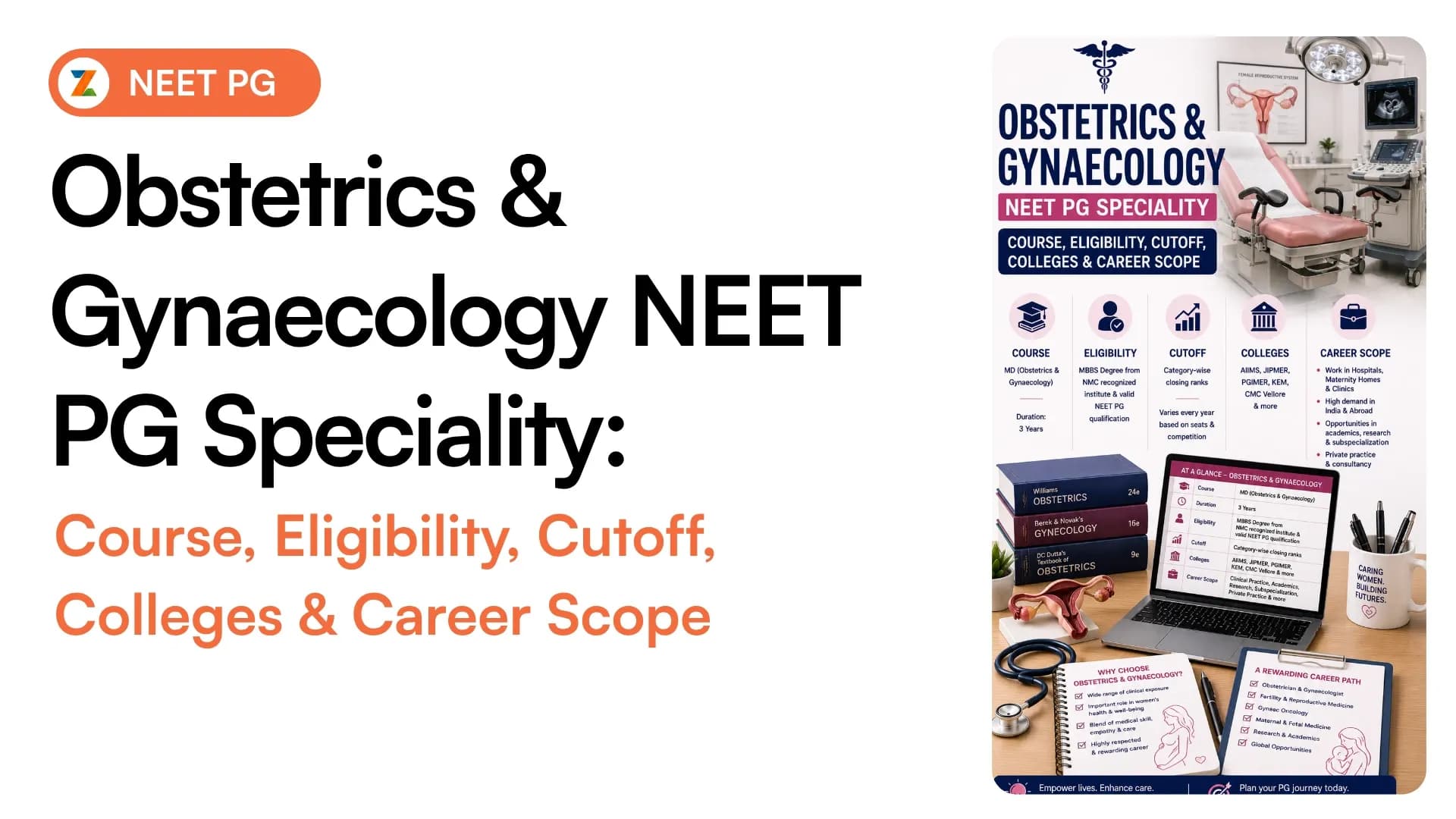
Obstetrics & Gynaecology, commonly referred to as OBGYN or OBG, is one of the most sought-after clinical specialities after MBBS. The speciality combines obstetrics, which focuses on pregnancy, childbirth and the postpartum period, with gynaecology, which deals with the diagnosis and management of disorders affecting the female reproductive system. This blog focuses on the 2025 All India Counselling process for the speciality.
For NEET PG aspirants, OBGYN is both academically important and clinically demanding. The subject covers a broad range of topics, including normal and high-risk pregnancy, labour, obstetric emergencies, infertility, menstrual disorders, contraception, reproductive endocrinology and gynaecological cancers.
The speciality is particularly suited to doctors who enjoy a combination of clinical medicine, surgery, emergency care, patient counselling and long-term patient relationships.
What is Obstetrics & Gynaecology?
Obstetrics & Gynaecology is a broad clinical speciality concerned with women's reproductive health throughout different stages of life.
Obstetrics primarily deals with:
Antenatal care and pregnancy monitoring
Normal and high-risk pregnancies
Labour and delivery
Fetal surveillance
Obstetric emergencies
Postpartum care
Pregnancy-related medical disorders
Maternal and fetal complications
Gynaecology focuses on:
Menstrual disorders
PCOS and other hormonal disorders
Infertility
Endometriosis and adenomyosis
Uterine fibroids
Pelvic organ prolapse
Urinary incontinence
Reproductive tract infections
Menopause
Gynaecological cancers
Contraception and reproductive health
NEET PG Course Options in Obstetrics & Gynaecology
There are three major postgraduate pathways in Obstetrics & Gynaecology:
Branch | Course | Availability |
|---|---|---|
Obstetrics & Gynaecology | MS | Yes |
DNB | Yes | |
PG Diploma | Yes | |
MD | No |
Obstetrics & Gynaecology Eligibility Criteria
Candidates seeking admission to MS Obstetrics & Gynaecology or DNB Obstetrics & Gynaecology through NEET PG generally need to meet the following requirements:
Possess an MBBS degree or provisional MBBS pass certificate recognised under the applicable regulations.
Have completed or be completing the required one-year internship by the prescribed cut-off date.
Hold permanent or provisional registration with the relevant medical council.
Qualify in NEET PG and participate in the applicable counselling process.
Meet any additional requirements specified in the current NEET PG information bulletin and counselling rules.
Obstetrics & Gynaecology Course Duration
Obstetrics & Gynaecology is offered as a 3-year MS and DNB postgraduate programme after completing MBBS and qualifying NEET PG.
Course | Duration |
|---|---|
MS Obstetrics & Gynaecology | 3 years |
DNB Obstetrics & Gynaecology | 3 years |
Obstetrics & Gynaecology Seat Availability
Obstetrics & Gynaecology seats are available through MS and PG Diploma programmes across government, private and other recognised medical institutions in India. The table below shows the available MS and PG Diploma seats, with seat numbers varying by institution.
Institute type | MS Obstetrics & Gynaecology | DNB Obstetrics & Gynaecology | Diploma Obstetrics & Gynaecology | Diploma Obstetrics & Gynaecology - NBE |
|---|---|---|---|---|
Deemed | 491 | - | - | - |
Government | 1209 | - | 23 | - |
NBE - Government Institute | - | 104 | - | 284 |
NBE - Private Institute | - | 243 | - | 218 |
NBE - Public Sector Institute | - | 12 | - | 6 |
Total Seats | 1700 | 359 | 23 | 508 |
Obstetrics & Gynaecology Previous Year's Cutoff Trends
Obstetrics & Gynaecology is a highly competitive NEET PG speciality, with closing ranks varying across MS, DNB and PG Diploma seats based on college, category and counselling round. The table below shows the previous year's cutoff trends for MS, DNB and PG Diploma seats of 2025 for All India Counselling.
Speciality | College Type | Closing Ranks |
|---|---|---|
MS Obstetrics & Gynaecology | Government | 227983 |
MS Obstetrics & Gynaecology | Deemed | 216112 |
DNB Obstetrics & Gynaecology | Government | 80001 |
DNB Obstetrics & Gynaecology | Private | 22267 |
PG Diploma Obstetrics & Gynaecology | Government | 68393 |
PG Diploma Obstetrics & Gynaecology - NBE | Government | 169847 |
PG Diploma Obstetrics & Gynaecology - NBE | Private | 38022 |
For detailed General Medicine closing ranks across All India Counselling and individual state counselling, refer to ZyNerd’s Allotment Mapping for college-wise and round-wise data.
Obstetrics & Gynaecology Fee Range
The fee for pursuing Obstetrics & Gynaecology varies depending on the type of institution, course and quota, with government colleges generally costing less than private and deemed institutions. The table below provides an overview of the fee range for Obstetrics & Gynaecology courses across different institutions of 2025 for All India Counselling.
Speciality | College Type | Fee Range |
|---|---|---|
MS Obstetrics & Gynaecology | Government | 1550-2000000 |
MS Obstetrics & Gynaecology | Deemed Universities | 2300000-17705680 |
DNB Obstetrics & Gynaecology | Private | 125000 |
DNB Obstetrics & Gynaecology | Government | 125000 |
PG Diploma Obstetrics & Gynaecology | Government | 1550-157100 |
PG Diploma Obstetrics & Gynaecology - NBE | Private | 125000 |
PG Diploma Obstetrics & Gynaecology - NBE | Government | 125000 |
Note: The fee range appears broad because it is based on the 2025 All India Counselling data and includes different types of institutions and quotas. Actual fees may vary significantly depending on the college, quota and state, so candidates can check the applicable fee structure before making their choices.
For detailed fee, stipend and bond information across All India Counselling and all state counsellings, refer to ZyNerd’s institute-wise data for updated college and counselling-specific details. Select the college and quota filters to view in-depth fee, stipend and bond details for your preferred options.
What Will You Learn in Obstetrics & Gynaecology?
MS/DNB OBGYN training provides exposure to both medical and surgical aspects of women's health.
Obstetrics
Major areas include:
Normal pregnancy and antenatal care
High-risk pregnancy
Hypertensive disorders of pregnancy
Gestational diabetes
Anaemia in pregnancy
Rh isoimmunisation
Fetal growth restriction
Multiple pregnancy
Preterm labour
PROM and PPROM
Placental disorders
Antepartum haemorrhage
Postpartum haemorrhage
Ectopic pregnancy
Molar pregnancy and gestational trophoblastic disease
Labour management
Operative obstetrics
Caesarean delivery
Instrumental delivery
Obstetric emergencies
Gynaecology
Training includes:
Abnormal uterine bleeding
PCOS
Endometriosis
Fibroids
Adenomyosis
Infertility
Menopause
Contraception
Pelvic organ prolapse
Urinary incontinence
Gynaecological infections
Benign ovarian disorders
Cervical pathology
Endometrial disorders
Gynaecological malignancies
Top Colleges Offering Obstetrics & Gynaecology
Some of the well-known institutions offering postgraduate training in Obstetrics & Gynaecology include:
All India Institute of Medical Sciences, New Delhi
Maulana Azad Medical College, New Delhi
Vardhman Mahavir Medical College and Safdarjung Hospital, New Delhi
Lady Hardinge Medical College, New Delhi
University College of Medical Sciences, New Delhi
Postgraduate Institute of Medical Education and Research, Chandigarh
Jawaharlal Institute of Postgraduate Medical Education and Research, Puducherry
King George's Medical University, Lucknow
Madras Medical College, Chennai
Bangalore Medical College and Research Institute, Bengaluru
Seth GS Medical College and KEM Hospital, Mumbai
Grant Medical College and Sir JJ Group of Hospitals, Mumbai
Institute of Medical Sciences, Banaras Hindu University, Varanasi
Christian Medical College, Vellore
Career Opportunities After Obstetrics & Gynaecology
An OBGYN postgraduate can pursue a wide range of clinical and academic careers.
1. Obstetrician & Gynaecologist
Graduates can work as consultants or specialists in:
Government hospitals
Private hospitals
Women's healthcare centres
Maternity hospitals
Multispecialty hospitals
2. Senior Residency
Senior residency is a popular option after postgraduate training, particularly for doctors interested in teaching hospitals, academic medicine and further specialisation.
3. Private Practice
OBGYN specialists can establish or join private clinics, maternity centres and women's healthcare practices.
4. Academic Medicine
Doctors interested in teaching can pursue careers in medical colleges and institutions, with opportunities for further academic progression and research.
5. Reproductive Medicine
Doctors can develop careers in infertility treatment, assisted reproductive technology and reproductive endocrinology.
6. Gynaecological Oncology
Those interested in cancer care can pursue advanced training in gynaecological oncology.
7. Maternal-Fetal Medicine
This area focuses on high-risk pregnancies, fetal medicine, prenatal diagnosis and complex maternal conditions.
Super-Specialization / Fellowship Options
After MS/DNB OBGYN, doctors can explore multiple advanced training pathways.
Some established options include:
MCh Gynaecological Oncology
MCh Reproductive Medicine & Surgery
Fellowships in Reproductive Medicine
Fellowships in Maternal-Fetal Medicine
Fellowships in Gynaecological Oncology
Fellowships in Minimal Access Gynaecological Surgery
Fellowships in Ultrasound and Fetal Medicine
Fellowships in Infertility and Assisted Reproductive Technology
Advanced training in Urogynaecology
The NMC PG curriculum lists MCh Gynaecological Oncology and MCh Reproductive Medicine & Surgery among its super-speciality programmes.
Common Conditions Managed / Procedures Performed
OBGYN involves both outpatient management and a substantial amount of procedural and surgical work.
Common Conditions Managed
Normal and high-risk pregnancy
Gestational diabetes
Pregnancy-induced hypertension
Eclampsia
Ectopic pregnancy
Placental disorders
Postpartum haemorrhage
PCOS
Fibroids
Endometriosis
Adenomyosis
Infertility
Menstrual disorders
Pelvic inflammatory disease
Menopause-related conditions
Cervical cancer
Endometrial cancer
Ovarian cancer
Pelvic organ prolapse
Urinary incontinence
Common Procedures
Depending on training exposure and institutional protocols, residents may gain experience in:
Normal vaginal delivery
Caesarean section
Assisted vaginal delivery
Episiotomy and repair
Management of obstetric emergencies
Manual removal of placenta
Management of postpartum haemorrhage
Dilatation and evacuation procedures
Diagnostic hysteroscopy
Laparoscopy
Gynaecological ultrasound
Cervical biopsy
Endometrial sampling
Tubal sterilisation
Management of ectopic pregnancy
Basic infertility procedures
Factors to Consider Before Choosing Obstetrics & Gynaecology
OBGYN can be an excellent speciality, but it is important to understand its demands before selecting it in counselling.
1. Interest in Women's Health
A genuine interest in reproductive health, pregnancy and women's healthcare is important for long-term satisfaction.
2. Surgical Interest
OBGYN combines medicine with surgery. Students should be comfortable developing operative and procedural skills.
3. Emergency Work
Labour rooms and obstetric units can involve unpredictable emergencies such as postpartum haemorrhage, eclampsia, fetal distress, obstructed labour and uterine rupture.
4. Workload
Residency can involve long working hours, emergency calls, night duties and a high patient load.
5. Patient Communication
OBGYN involves sensitive discussions about pregnancy, infertility, contraception, sexual health, reproductive choices and cancer. Strong communication and counselling skills are therefore valuable.
6. Surgical and Clinical Balance
Candidates who enjoy both clinical decision-making and surgery may find OBGYN particularly rewarding.
7. Future Specialisation
Those interested in infertility, fetal medicine, oncology, reproductive endocrinology, high-risk obstetrics or minimally invasive surgery have several avenues for further training.
8. College and Case Exposure
When comparing colleges, do not consider rank alone. Evaluate:
Delivery load
Number and variety of surgeries
Emergency exposure
NICU support
High-risk pregnancy exposure
Oncology services
Infertility and ART exposure
Ultrasound and fetal medicine facilities
Faculty strength
Resident workload
Academic environment
_11zon.webp)
Frequently Asked Questions
Here are some answers to questions you might be looking for.

Related Blogs
Otorhinolaryngology (ENT) NEET PG Speciality: Course, Eligibility, Cutoff, Colleges, Fees & Career Scope
Otorhinolaryngology, commonly known as ENT, is a surgical speciality concerned with the diagnosis and management of disorders affecting the ear, nose, throat, larynx, head and neck. ENT specialists manage conditions ranging from common problems such as tonsillitis, sinusitis and ear infections to complex disorders involving hearing, balance, voice, swallowing and head and neck cancers.
Aug 24, 2026

Psychiatry NEET PG Speciality: Course, Cutoff, Colleges, Career & Scope
Psychiatry is a clinical medical speciality focused on the diagnosis, treatment, prevention and rehabilitation of mental, emotional and behavioural disorders. With increasing awareness of mental health and growing demand for specialist psychiatric care, Psychiatry has become an increasingly sought-after choice among NEET PG aspirants.
Aug 23, 2026
Ophthalmology NEET PG Speciality: Course, Eligibility, Seats, Cutoff, Fees, Career & Fellowship Options
Ophthalmology is a popular surgical speciality that focuses on the diagnosis, treatment and prevention of disorders affecting the eye, visual system and related structures. For NEET PG aspirants, it offers a combination of clinical medicine, microsurgery, diagnostic procedures and technology-driven treatments.
Aug 24, 2026

Paediatrics NEET PG Speciality: Course, Eligibility, Seats, Cutoff, Fees and Career Scope
Paediatrics is one of the most sought-after clinical specialities among NEET PG aspirants who enjoy working with children and want to build a career focused on preventive, diagnostic and therapeutic care from infancy through adolescence.
Aug 24, 2026
Radiodiagnosis NEET PG Speciality: Course, Eligibility, Seats, Cutoff, Fees & Career Scope
Radiodiagnosis is one of the most sought-after clinical specialities among NEET PG aspirants who are interested in medical imaging, technology, diagnosis and image-guided procedures. Radiologists use imaging modalities such as X-ray, ultrasound, CT and MRI to identify diseases, assess their severity and support treatment decisions.
Aug 24, 2026
General Surgery NEET PG: Course, Eligibility, Cutoff, Fees, Colleges & Career Scope
General Surgery is one of the most sought-after clinical specialities among NEET PG aspirants who are interested in operative care, emergency medicine, trauma management and hands-on patient treatment.
Aug 23, 2026