


All blogs
Share
Published on 18 February, 2026
NEET SS Seat Matrix 2025: Expected Seats, Previous Year Trends & Counselling Insights
Table of contents
- NEET SS 2025 Seat Matrix
- NEET SS 2025 Expected Seat Matrix
- Previous Year NEET SS Seat Matrix (Last 2 Years Comparison)
- NEET SS 2025 Speciality-Wise Seat Distribution
- NEET SS 2024 Government vs Private Seat Distribution
- AIQ Seat Allocation in NEET SS
- How to Use Seat Matrix for Choice Filling in NEET SS
- Official links to check
- Conclusion
The NEET SS seat matrix 2025 serves as the official, institute-wise and speciality-wise compilation of super-speciality seats (DM, MCh, and DrNB) released by the Medical Counselling Committee (MCC) ahead of centralised counselling. This document, published on the MCC website (mcc.nic.in) before Round 1 begins, details available seats across government, private, deemed, and other institutions, enabling qualified candidates to strategise choices based on rank, preferred superspecialties, and location. This blog provides a clear definition of the seat matrix, links to official MCC sources, expected breakdowns by course and category, and a comparison with the previous 3 years' matrices to help aspirants plan realistic rank-vs-speciality targets and make informed decisions during choice filling.
NEET SS 2025 Seat Matrix
The seat matrix lists the number of seats available for each super-speciality (e.g., DM Cardiology, MCh Neurosurgery, DrNB Neurology) at each participating institute, along with the quota. It is the base document used for centralised MCC counselling. The Medical Counselling Committee (MCC) publishes the matrix on its Super Speciality counselling pages. The matrix is released before Round 1 choice filling and may be updated before later rounds. It tells you which specialities and institutes will actually be available in counselling, so you can map your rank to likely choices and set a realistic priority order.
NEET SS 2025 Expected Seat Matrix
The official NEET SS 2025 seat matrix is yet to be released and will be available on the Medical Counselling Committee's official website before counselling. Candidates should note that the final, round-wise matrix published by MCC is the only authoritative source for actual seat availability.
Based on the NEET SS 2024 data, a total of 6,629 seats were available nationwide, including 2,749 government seats and 3,282 private seats across participating institutes. These figures provide a realistic reference point for understanding the expected seat pool for 2025. The seat matrix also includes seats from deemed universities, AFMS institutions, and other centrally participating institutes under the centralised counselling process.
However, the final NEET SS 2025 seat numbers may change after the official MCC notification, due to factors such as updates to institute participation, seat additions, accreditation changes, or round-wise revisions in the matrix during counselling.
Previous Year NEET SS Seat Matrix (Last 2 Years Comparison)
This section compares the total seat trends over the past two years to help understand whether seat availability has increased, decreased, or remained stable.
Year | Round | Government Seats | Private Seats | AFMS | Deemed | State Society/PPP (State University) | NBE - Public Sector Institute | Total Seats |
|---|---|---|---|---|---|---|---|---|
2024 | 1 | 2749 | 3282 | 43 | 536 | 19 | - | 6629 |
2023 | 1 | 2554 | 2703 | 40 | 491 | 19 | 2 | 5809 |
NEET SS 2025 Speciality-Wise Seat Distribution
This section breaks down seats across major super-specialities to show where the highest seat availability exists across government and private institutes. It helps candidates identify high-demand branches and understand how seats are distributed, speciality-wise, in the latest matrix.
Speciality | Round | Total Seats | Government Seats | Private Seats |
|---|---|---|---|---|
DM Cardiology | 1 | 542 | 331 | 125 |
DM Critical Care Medicine | 1 | 123 | 47 | 37 |
DM Endocrinology | 1 | 119 | 64 | 33 |
DM Nephrology | 1 | 262 | 146 | 65 |
DM Pulmonary Medicine | 1 | 57 | 42 | 11 |
DrNB Cardio Thoracic & Vascular Surgery | 1 | 36 | 9 | 26 |
DrNB Clinical Immunology & Rheumatology | 1 | 34 | 6 | 27 |
DrNB Critical Care Medicine | 1 | 574 | 2 | 570 |
DrNB Endocrinology | 1 | 52 | 15 | 35 |
DrNB Nephrology | 1 | 254 | 14 | 238 |
MCh Cardio Thoracic & Vascular Surgery | 1 | 213 | 174 | 16 |
MCh Vascular Surgery | 1 | 25 | 12 | 9 |
MCh Urology | 1 | 399 | 201 | 107 |
MCh Surgical Oncology | 1 | 199 | 124 | 54 |
MCh Neuro Surgery | 1 | 385 | 269 | 63 |
NEET SS 2024 Government vs Private Seat Distribution
As per the NEET SS 2024 seat matrix, a total of 6,629 super-speciality seats were available nationwide, including 2,749 government seats, 3,282 private seats, and 536 seats in deemed universities, reflecting a larger share of seats in private and deemed institutions within the centralised counselling pool. The seat matrix also includes seats from deemed universities, AFMS institutions, and other centrally participating institutes under the centralised counselling process.
The availability of NEET SS seats varies structurally between government and private/deemed institutes, and understanding this difference is essential when analysing the seat matrix.
Government super-speciality seats are limited and mostly concentrated in established medical colleges and apex institutes, making them highly rank-sensitive during counselling. In high-demand specialities like Cardiology, Neurology, and major surgical branches, even small rank differences can significantly affect allotment. In contrast, private, deemed, and DrNB institutes offer seats across a wider set of institutions, leading to broader availability and comparatively longer seat retention across counselling rounds.
Top-rank candidates generally prioritise government institutes due to lower fees, reputation, and clinical exposure, which causes these seats to close at very high ranks. For mid-rank candidates, private, deemed, and DrNB seats often remain accessible across a wider rank range, mainly because of a larger seat pool and differing fee structures rather than lower demand.
AIQ Seat Allocation in NEET SS
NEET SS counselling is conducted entirely at the national level by the Medical Counselling Committee (MCC). Unlike NEET PG, there is no separate 50% state quota counselling handled by individual state authorities for super-speciality seats. All eligible candidates across India participate in a single centralised counselling process based strictly on their NEET SS rank and the group-wise merit list. This means your domicile state does not give you a separate advantage in seat allocation, the way it can in PG counselling.
The counselling process, seat matrix publication, choice filling, allotment, and upgrades are all managed centrally through the Medical Counselling Committee.
In NEET SS, the seat pool functions as an All India merit-based system.
Seats are allotted based on national rank, not state rank
Candidates can choose institutes across any state in India
There is no state-wise reservation pool like PG
Allotment is determined by Merit + eligibility group + choices filled
This structure ensures uniform competition across the country and makes rank strategy more important than domicile strategy.
The NEET SS seat matrix published by MCC includes seats from multiple categories of institutions under a single counselling system:
a) Deemed Universities
Deemed universities offering DM/MCh programs are also included in NEET SS counselling.
Important clarifications:
They participate in MCC centralised counselling
Fees are usually higher than those at government institutes
Competition varies speciality-wise
Candidates must select them during choice filling under the deemed category
Even though they are private/deemed institutions, their seats are still allotted through the same centralised AIQ-based process.
b) DrNB (NBEMS Accredited Hospitals)
DrNB Super Speciality seats accredited by the National Board of Examinations in Medical Sciences are also part of the NEET SS seat matrix and counselling.
These seats are offered in accredited private and corporate hospitals across India and are allotted through MCC counselling rounds.
How to Use Seat Matrix for Choice Filling in NEET SS
The seat matrix should first be read alongside your NEET SS rank. Instead of randomly selecting institutes, analyse how many seats are available in your eligible speciality group and where they are distributed. A speciality with more seats across multiple institutes generally offers a wider allotment window than niche branches with very limited intake. This mapping helps you understand realistic possibilities before making choices.
Avoid filling only unrealistic choices
One of the most common mistakes in choice filling is selecting only the top institutes or highly competitive specialities without considering rank feasibility. The seat matrix clearly shows limited seat counts in apex institutes and high-demand branches. Filling only such options increases the risk of not getting any allotment in the early rounds.
Use the previous year's closing ranks for grounded decisions
Comparing the seat matrix with the previous year's closing ranks provides crucial context. Seat numbers alone do not indicate competition intensity. A speciality with moderate seats may still close at very high ranks due to demand. Reviewing past closing ranks alongside the current matrix helps in identifying realistic institutes, expected rank range for each speciality, and probable movement in later rounds.
When will the NEET SS 2025 Official Seat Matrix Be Released?
MCC usually publishes the seat matrix just before Round 1 registration/choice filling on the MCC Super Speciality counselling page. Revised matrices or newly added seats may appear before Round 2. It is important to refer only to the latest matrix published by the MCC during the active round, since older matrices may not reflect current seat availability. Downloading the official PDF and reviewing speciality-wise and institute-wise seats carefully before locking choices ensures more accurate and data-backed preference ordering.
Official links to check
MCC Super Speciality counselling landing page and current events: https://mcc.nic.in/super-speciality-counselling/
MCC archive of final seat matrices (DM/MCh and DrDNB PDFs): https://mcc.nic.in/archive-super-spl/
Conclusion
The NEET SS seat matrix is a critical planning tool that goes beyond just showing seat numbers. It provides a clear picture of specialty availability, institute distribution, and competition dynamics within the centralised counselling system. By carefully analysing seat distribution, previous year trends, and rank feasibility, candidates can make more informed and realistic choice lists. A structured approach that balances speciality preference, seat availability, and expected closing trends ultimately improves allotment outcomes and reduces the risk of missed opportunities during the counselling process.
Frequently Asked Questions
Here are some answers to questions you might be looking for.

Related Blogs
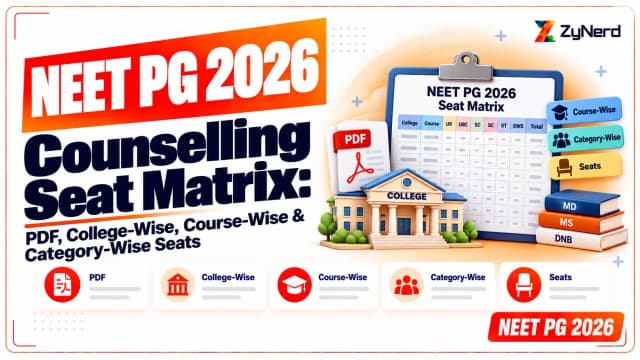
NEET PG 2026 Counselling Seat Matrix: PDF, College-Wise, Course-Wise & Category-Wise Seats
The NEET PG counselling 2026 seat matrix is one of the most important documents for candidates preparing their choice-filling strategy. It shows the postgraduate courses and the number of seats available across medical colleges and institutions for the academic year 2026-27.
Oct 1, 2026
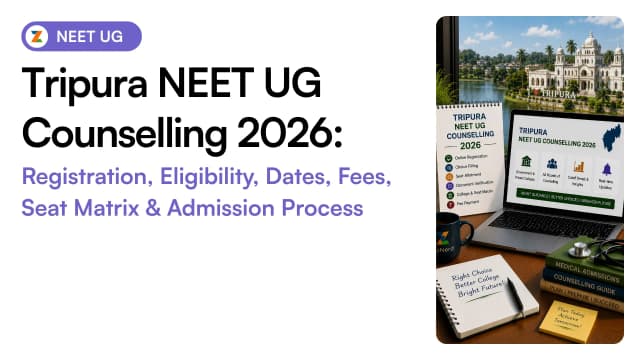
Tripura NEET UG Counselling 2026: Registration, Eligibility, Dates, Fees, Seat Matrix & Admission Process
Tripura NEET UG Counselling 2026 is the state-level admission process for candidates seeking MBBS, BDS and other NEET-based undergraduate medical and allied health courses through seats administered by the Tripura Medical Counselling Committee (TRMCC). The counselling is conducted under the Directorate of Medical Education (DME), Government of Tripura.
Aug 17, 2026
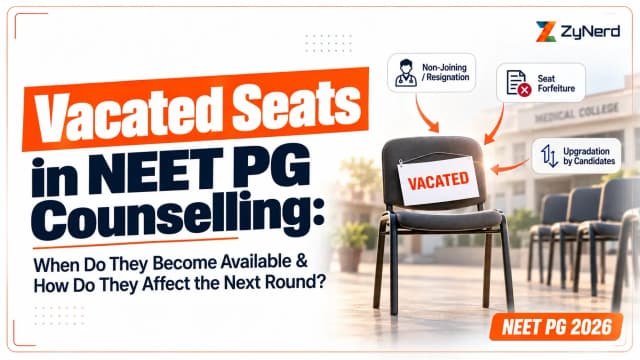
Vacated Seats in NEET PG Counselling: When Do They Become Available & How Do They Affect the Next Round?
After a NEET PG counselling round, the seat matrix can change significantly. A seat that was occupied in one round may become available because a candidate upgrades, resigns, does not join, or exits according to the rules. At the same time, some seats shown during choice filling may only be potentially available and may not actually become vacant.
Sep 10, 2026

Minority Seats in NEET PG Counselling: Linguistic & Religious Minority Eligibility, Colleges & Admission Rules
Minority seats in NEET PG counselling are available in certain medical colleges that have recognised religious or linguistic minority status. These seats are not governed by one uniform national minority-quota rule. The eligibility, documentation, seat distribution and counselling process can differ depending on the state, institution and type of seat.
Sep 10, 2026
Karnataka NEET PG Counselling for Non-Karnataka Candidates: Private, Management & Government Seat Eligibility
Karnataka is one of the most preferred destinations for NEET PG aspirants from across India, particularly because its counselling includes seats in government colleges, private medical colleges, minority institutions and private universities. For Karnataka NEET PG counselling for non Karnataka candidates, however, the most important point is that eligibility depends on the type of seat being sought.
Sep 2, 2026
NEET SS Syllabus 2026: Subject-Wise Syllabus, DM/MCh Specialities & Exam Pattern
The National Eligibility cum Entrance Test for Super Speciality (NEET SS) is a national-level entrance examination conducted by the National Board of Examinations in Medical Sciences (NBEMS).
Nov 11, 2026