


All blogs
Share
Published on 7 July, 2026
NEET PG Syllabus 2026: Complete Subject List, Exam Pattern & Preparation Guide
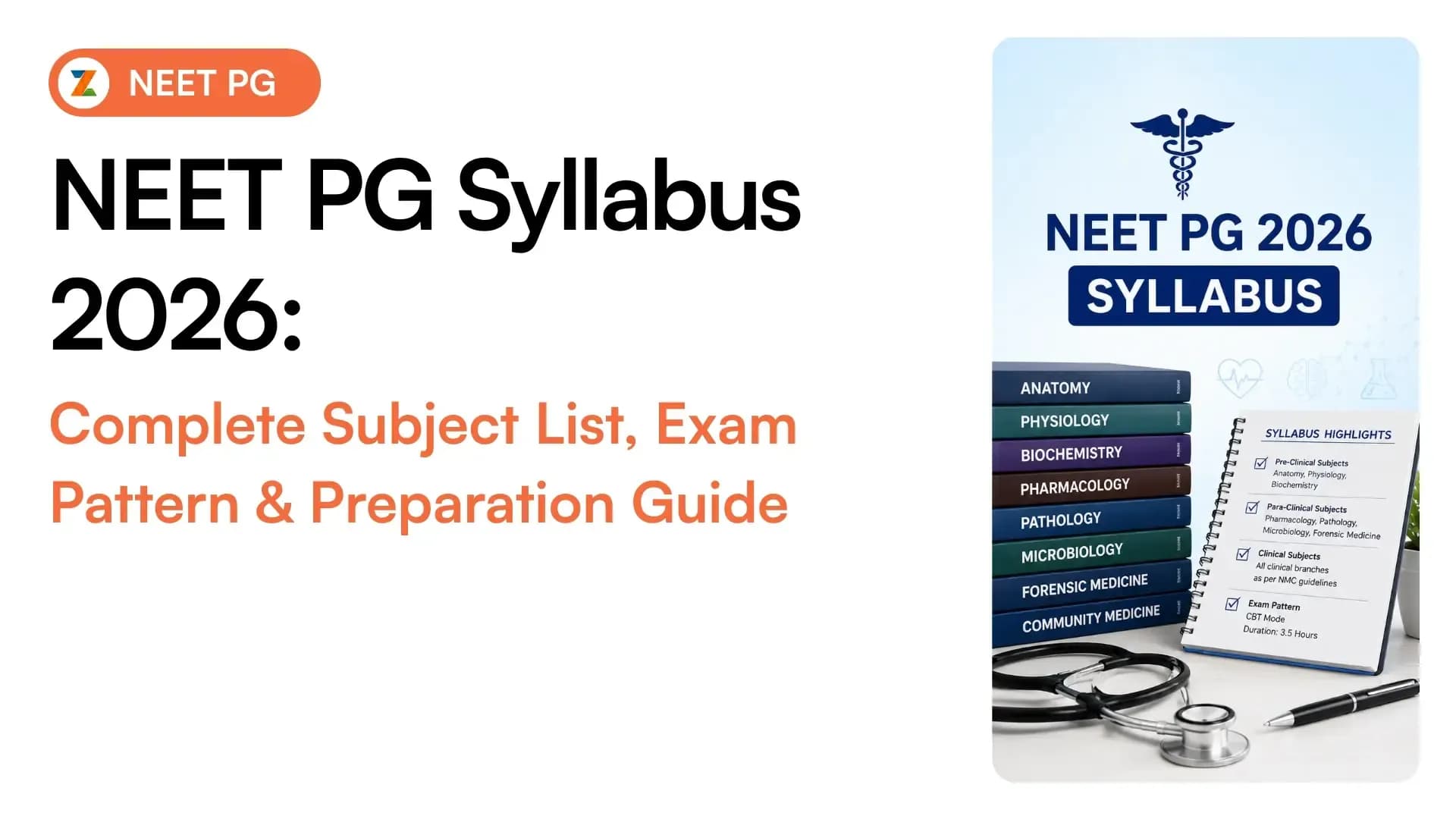
NEET PG is one of the most competitive post-graduate medical entrance exams in India for admission to MD, MS, PG Diploma and DNB courses. The NEET PG syllabus 2026 is important to know thoroughly to prepare well for the exam as every year thousands of MBBS graduates appear for this exam.
The examination is aligned with the Competency Based Undergraduate (CBME) curriculum stipulated by the National Medical Commission (NMC) for the MBBS programme. The syllabus tests candidates on concepts learned during their undergraduate medical education, with emphasis on clinical reasoning, problem solving and integrated application of knowledge.
In this guide, we will cover the NEET PG Syllabus 2026, exam pattern, list of all the subjects, how to prepare for the exam, mistakes that you should avoid and some of the most commonly asked questions with their answers.
NEET PG Syllabus 2026 Overview
The NEET PG 2026 syllabus encompasses all subjects taught during the MBBS course. Rather than testing isolated theoretical knowledge, the examination assesses a candidate's ability to integrate concepts from preclinical, paraclinical, and clinical disciplines to solve patient-based scenarios.
Particulars | Details |
|---|---|
Exam Name | NEET PG 2026 |
Conducting Authority | National Board of Examinations in Medical Sciences (NBEMS) |
Number of Subjects | 19 MBBS Subjects |
Exam Mode | Computer-Based Test (CBT) |
Question Type | Multiple Choice Questions (MCQs) |
Medium | English |
NEET PG 2026 Exam Pattern
Understanding the exam pattern is just as important as knowing the syllabus. It helps candidates plan their preparation and allocate time effectively.
Particular | Details |
|---|---|
Duration | 3 Hours 30 Minutes |
Total Questions | 180 |
Maximum Marks | 720 |
Correct Answer | +4 |
Incorrect Answer | -1 |
No Answer | 0 |
NEET PG 2026 Subject List
The NEET PG syllabus covers all 19 subjects studied during the MBBS programme. These subjects are broadly divided into three categories.
Pre-clinical | Para-clinical | Clinical |
|---|---|---|
Anatomy | Pathology | General Medicine |
Physiology | Pharmacology | Dermatology, Venereology & Leprosy |
Biochemistry | Microbiology | Psychiatry |
Forensic Medicine | General Surgery | |
Community Medicine (Preventive & Social Medicine) | Orthopaedics | |
Anaesthesiology | ||
Obstetrics & Gynaecology | ||
Paediatrics | ||
Ophthalmology | ||
Otorhinolaryngology (ENT) | ||
Radiodiagnosis |
NEET PG Syllabus 2026 (Subject-wise)
The NEET PG 2026 syllabus covers all 19 subjects taught during the MBBS course, as prescribed by the National Medical Commission (NMC). These subjects are broadly categorized into pre-clinical, para-clinical, and clinical disciplines, ensuring comprehensive assessment of both theoretical knowledge and clinical application.
Pre-clinical Subjects 2026
Anatomy | Physiology | Biochemistry |
|---|---|---|
Anatomical terminology | General Physiology | Basic Biochemistry |
General features of bones & Joints | Haematology | Enzymes |
General features of Muscle | Respiratory System | Chemistry and Metabolism of Carbohydrates |
General features of skin and fascia | Cardiovascular System | Chemistry and Metabolism of Lipids |
General features of the cardiovascular system | Gastrointestinal System | Chemistry and Metabolism of Proteins |
General Features of lymphatic system | Renal Physiology and Fluid-Electrolyte Balance | Metabolism of Amino Acids |
Introduction to the nervous system | Endocrinology | Nucleotide Chemistry and Metabolism |
Features of individual bones (Upper Limb) | Reproductive System | Integration of Metabolism |
Pectoral region | Central Nervous System | Metabolic Changes in Starvation and Well-fed State |
Axilla, Shoulder and Scapular region | Special Senses | Molecular Biology |
Arm & Cubital fossa | Integrated Physiology | Nutrition |
Forearm & hand | Environmental Physiology | Vitamins |
General Features, Joints, radiographs & surface marking | Sports Physiology | Mineral Metabolism |
Features of individual bones (Lower Limb) | Nerve & Muscle Physiology | Environmental Biochemistry |
Front & Medial side of thigh | Hormones | |
Gluteal region & back of thigh | Acid-Base Balance | |
Hip Joint | Water and Electrolyte Balance | |
Knee joint, Anterolateral compartment of leg & dorsum of foot | Organ Function Tests | |
Back of Leg & Sole | Detoxification and Xenobiotics | |
General Features, Joints, radiographs & surface marking | Clinical Biochemistry | |
Thoracic cage | Cancer and Tumor Markers | |
Heart & Pericardium | Free Radicals and Antioxidants | |
Mediastinum | Biochemical Genetics | |
Lungs & Trachea | Laboratory Investigations and Quality Control | |
Thorax | ||
Skull osteology | ||
Scalp | ||
Face & parotid region | ||
Posterior triangle of neck | ||
Cranial cavity | ||
Orbit | ||
Anterior Triangle | ||
Temporal and Infratemporal regions | ||
Submandibular region | ||
Deep structures in the neck | ||
Mouth, Pharynx & Palate | ||
Cavity of Nose | ||
Larynx | ||
Tongue | ||
Organs of hearing and equilibrium | ||
Eyeball | ||
Back region | ||
Head & neck Joints, Histology, Development, Radiography & Surface marking | ||
Anterior abdominal wall | ||
Posterior abdominal wall | ||
Male external genitalia | ||
Abdominal cavity | ||
Pelvic wall and viscera | ||
Perineum | ||
Vertebral column | ||
Sectional Anatomy | ||
Histology & Embryology | ||
Osteology | ||
Radiodiagnosis | ||
Surface marking | ||
Meninges & CSF | ||
Spinal Cord | ||
Medulla Oblongata | ||
Pons | ||
Cerebellum | ||
Midbrain | ||
Cranial nerve nuclei & Cerebral hemispheres | ||
Ventricular System | ||
Histology & Embryology | ||
Epithelium histology | ||
Connective tissue histology | ||
Muscle histology | ||
Nervous tissue histology | ||
Blood Vessels | ||
Glands & Lymphoid tissue | ||
Bone & Cartilage | ||
Integumentary System | ||
Chromosomes | ||
Patterns of Inheritance | ||
Principle of Genetics, Chromosomal Aberrations & Clinical Genetics | ||
Introduction to embryology | ||
Gametogenesis and fertilization | ||
Second week of development | ||
3rd to 8th week of development | ||
Fetal membranes | ||
Prenatal Diagnosis | ||
Ethics in Anatomy |
Para-clinical Clinical Subjects 2026
Pathology | Pharmacology | Microbiology | Forensic Medicine | Community Medicine |
|---|---|---|---|---|
Introduction to Pathology | Pharmacology | General Microbiology and Immunity | General Information | Concept of Health and Disease |
Cell Injury and Adaptation | Clinical Pharmacy | Cardiovascular System and Blood | Forensic Pathology | Relationship of Social and Behavioural Factors to Health and Disease |
Amyloidosis | Clinical Pharmacology | Gastrointestinal & Hepatobiliary System | Clinical Forensic Medicine | Environmental Health Problems |
Inflammation | Experimental Pharmacology | Central Nervous System | Medical Jurisprudence | Principles of Health Promotion and Education |
Healing and Repair | Communication Pharmacology | Skin and Soft Tissue | Forensic Psychiatry | Nutrition |
Hemodynamic Disorders | Respiratory System | Forensic Laboratory Investigation | Basic Statistics and its Applications | |
Disorders of Growth | Genitourinary & Sexually Transmitted Infections | Emerging Technologies | Epidemiology | |
Neoplasia | Musculoskeletal System | General Toxicology | Epidemiology of Communicable and Non-Communicable Diseases | |
Immunopathology | Zoonotic Diseases | Chemical Toxicology | Demography and Vital Statistics | |
Genetic and Pediatric Diseases | Miscellaneous Infections | Pharmaceutical Toxicology | Reproductive, Maternal and Child Health | |
Environmental and Nutritional Diseases | Parasitology | Biotoxicology | Occupational Health | |
Introduction to Hematology | Hospital Infection Control | Sociomedical Toxicology | Geriatric Services | |
Anemia | Applied Microbiology | Environmental Toxicology | Disaster Management | |
White Blood Cell Disorders | Hospital Waste Management | |||
Platelet Disorders | Mental Health | |||
Disorders of Coagulation | Health Planning and Management | |||
Blood Banking and Transfusion Medicine | Health Care of the Community | |||
Clinical Pathology | International Health | |||
Cardiovascular System | Essential Medicines | |||
Respiratory System | Recent Advances in Community Medicine | |||
Gastrointestinal Tract | ||||
Hepatobiliary System | ||||
Lymphoreticular System | ||||
Kidney and Lower Urinary Tract | ||||
Male Genital System | ||||
Female Genital Tract | ||||
Breast | ||||
Endocrine System | ||||
Skin | ||||
Bones, Joints and Soft Tissue Tumours | ||||
Nervous System |
Clinical Subjects 2026
General Medicine | Dermatology, Venereology and Leprosy | Psychiatry | General Surgery | Orthopaedics | Anaesthesiology | Obstetrics & Gynaecology | Paediatrics | Ophthalmology | Otorhinolaryngology (ENT) | Radiodiagnosis |
|---|---|---|---|---|---|---|---|---|---|---|
Heart Failure | Acne | Doctor Patient Relationship | Metabolic response to injury | Skeletal Trauma, Poly trauma | Anaesthesiology as a specialty | Demographic and Vital Statistics | Normal Growth and Development | Visual Acuity Assessment | Anatomy and Physiology of ear, nose, throat, head & neck | Radiological investigations and Radiation safety |
Acute Myocardial Infarction | Vitiligo | Mental Health | Shock | Fractures | Cardiopulmonary resuscitation | Anatomy of the female reproductive tract (Basic anatomy and embryology) | Common problems related to Growth | Lids and Adnexa, Orbit | Clinical Skills | |
Pneumonia | Papulosquamous Disorders | Introduction to Psychiatry | Blood and blood components | Musculoskeletal Infection | Preoperative evaluation and medication | Physiology of conception | Common problems related to Development -1 (Developmental delay , Cerebral palsy) | Conjunctiva | Diagnostic and Therapeutic procedures in ENT | |
Fever and Febrile Syndromes | Lichen Planus | Psychotic Disorders | Burns | Skeletal Tuberculosis | General Anaesthesia | Development of the fetus and the placenta | Common problems related to Development-2 (Scholastic backwardness, Learning Disabilities , Autism , ADHD) | Corneas | Management of diseases of ear, nose & throat | |
Liver Disease | Scabies | Depression | Wound healing and wound care | Rheumatoid Arthritis and associated inflammatory disorders | Regional anaesthesia | Maternal Changes in pregnancy | Common problems related to behavior | Sclera | ||
HIV | Dermatophytosis | Bipolar Disorders | Surgical infections | Degenerative disorders | Post-anaesthesia recovery | Preconception counselling | Adolescent Health | Iris and Anterior chamber | ||
Rheumatologic problems | Viral Infections of Skin | Anxiety Disorders | Surgical Audit and Research | Metabolic bone disorders | Intensive Care Management | Diagnosis of pregnancy | Breastfeeding | Lens | ||
Hypertension | Leprosy | Stress related Disorders | Ethics | Poliomyelitis | Pain and its management | Antenatal Care | Nutrition | Retina & optic Nerve | ||
Anemia | Sexually Transmitted Diseases | Somatic Symptom and Related Disorders | Investigation of surgical patient | Cerebral Palsy | Fluids | Complications in early pregnancy | Obesity in children | Miscellaneous | ||
Acute Kidney Injury | HIV and Skin | Personality Disorders | Pre, intra and post-operative management | Bone Tumors | Patient safety | Antepartum haemorrhage | Micronutrients in Health and disease | |||
Diabetes Mellitus | Urticaria and Angioedema | Psychosomatic disorders | Anaesthesia and pain management | Peripheral nerve injuries | Multiple pregnancies | |||||
Thyroid Dysfunction | Drug Reactions | Psychosexual and gender identity disorders | Nutrition and fluid therapy | Congenital lesions | Medical Disorders in pregnancy | |||||
Obesity | Vesiculobullous Disorders | Psychiatric disorders in childhood and adolescence | Transplantation | Procedural Skills | Labour | |||||
GI Bleeding | Connective Tissue Disorders | Mental retardation | Biohazard disposal | Counselling Skills | Abnormal Lie and Presentation; Maternal Pelvis | |||||
Diarrhoeal Disorder | Skin Tumours | Psychiatry disorders in the elderly | Basic Surgical Skills | Operative obstetrics | ||||||
Bronchial Asthma | Systemic Diseases and the Skin | Psychiatric emergencies | Minimally invasive General Surgery | Complications of the third stage | ||||||
Chronic Obstructive Pulmonary Disease (COPD) | Disorders of Hair and Nails | Trauma | Lactation | |||||||
Pleural Effusion | Topical Therapies in Dermatology | Skin and subcutaneous tissue | Care of the new born | |||||||
Pneumothorax | Developmental anomalies of face, mouth and jaws | Puerperium | ||||||||
Interstitial Lung Disease | Oropharyngeal cancer | Medical Termination of Pregnancy | ||||||||
Tuberculosis | Disorders of salivary glands | Contraception | ||||||||
Valvular Heart Disease | Endocrine General Surgery: Thyroid and parathyroid | Vaginal discharge | ||||||||
Cardiac Arrhythmias | Adrenal glands | Normal and abnormal puberty | ||||||||
Pancreas | Abnormal uterine bleeding | |||||||||
Breast | Amenorrhea | |||||||||
Cardio-thoracic General Surgery- Chest - Heart and Lungs | Endometriosis and adenomyosis | |||||||||
Vascular diseases | Sexually transmitted infections and Pelvic Inflammatory Disease | |||||||||
Abdomen | Infertility | |||||||||
Urinary System | Uterine fibroids | |||||||||
Penis, Testis and scrotum | PCOS and hirsutism | |||||||||
Prolapse of uterus | ||||||||||
Menopause |
How to Prepare According to the NEET PG Syllabus 2026
Preparing for NEET PG requires a structured approach rather than simply repeatedly covering textbooks. Since the syllabus spans the entire MBBS curriculum, a balanced strategy helps maximise retention and revision.
Understand the Entire Syllabus
Begin by familiarising yourself with all 19 subjects. Knowing the scope of the syllabus allows you to create realistic study plans and avoid last-minute surprises.
Develop strong conceptual foundations
The exam increasingly tests conceptual understanding and clinical application, not factual recall. Deep revision of standard MBBS concepts is more useful than rote learning.
Make a Subject-wise Study Plan
Divide your preparation into small bits, and don’t skip any subject. Give more time to the subjects that you find difficult, but keep revising the subjects you are good at regularly.
Solve Previous Years' Questions
Practicing previous years’ NEET PG questions helps you identify commonly tested concepts, enhance your speed and get familiar with the examination pattern.
Take Regular Mock Tests
Full-length mock tests help in improving time management, identifying weak areas and building examination temperament. Analysing mistakes after every test is equally important.
Prioritize Revision
Revision is necessary for long-term retention. Prepare brief notes, flow charts and summary tables which you can quickly revise in the last few weeks before the examination.
Focus on Clinical Integration
Many questions combine concepts from multiple disciplines. Try to understand diseases from anatomy, physiology, pathology, pharmacology, and clinical management perspectives rather than studying each subject independently.
Common NEET PG Syllabus 2026 Mistakes to Avoid
Many aspirants spend months studying but fail to optimise their preparation because of avoidable mistakes.
1. Ignoring first-year subjects: Anatomy, Physiology, and Biochemistry continue to form the basis of many integrated clinical questions.
2. Ignoring regular revision: Completing the syllabus without revising the topics results in poor retention and unnecessary stress prior to the examination.
3. Over-dependence on notes: Notes are useful for revision, but they should not substitute for an understanding of concepts from standard MBBS textbooks.
4. Mock tests not taken: Candidates who do not take mock tests often have problems with time management and exam pressure.
5. Leaving out weaker subjects: Every subject has its contribution to the total score. Skipping your weak areas can impact your rank drastically.
6. Memorising without understanding: Modern NEET PG questions increasingly test reasoning and application rather than rote learning.
_11zon.webp)
Frequently Asked Questions
Here are some answers to questions you might be looking for.

Related Blogs

Tamil Nadu NEET PG 2026 Counselling Documents Required: Complete Checklist for All Quotas
Candidates preparing for Tamil Nadu NEET PG 2026 counselling should keep all the required certificates and documents ready before completing the counselling application. The Tamil Nadu Selection Committee, Directorate of Medical Education and Research, Chennai, has notified candidates that counselling for PG MD, MS, Diploma and DNB courses for the 2026-27 session will commence shortly.
Oct 13, 2026

NEET PG 2026 Counselling Seat Matrix: PDF, College-Wise, Course-Wise & Category-Wise Seats
The NEET PG counselling 2026 seat matrix is one of the most important documents for candidates preparing their choice-filling strategy. It shows the postgraduate courses and the number of seats available across medical colleges and institutions for the academic year 2026-27.
Oct 1, 2026

NEET PG Result 2026 Out @natboard.edu.in: How to Check, Scorecard, Cut-Off, Merit List & More
NEET PG result 2026 tentative release date is September 30, 2026 as per the schedule released by National Board of Examinations in Medical Sciences (NBEMS). The NEET PG 2026 result will be announced on the official website for the candidates who had appeared in the examination.
Sep 15, 2026
NEET PG 2026 Round 1 Seat Allotment Result, Download Link, Reporting and Free Exit Rules
The NEET PG Round 1 seat allotment result 2026 is an important milestone for candidates seeking admission to MD, MS, DNB and other eligible postgraduate medical programmes through MCC counselling.
Oct 23, 2026
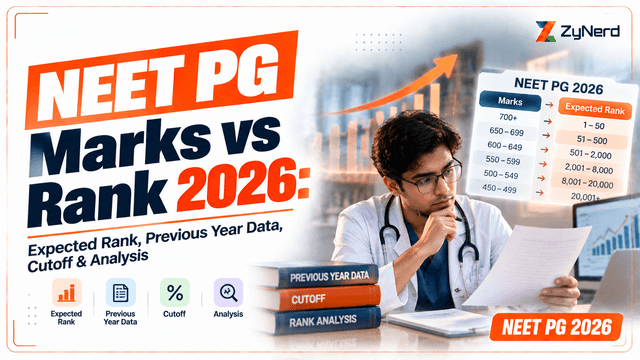
NEET PG Marks vs Rank 2026: Expected Rank, Previous Year Data, Cutoff & Analysis
The NEET PG marks vs rank 2026 comparison is especially important this year because NEET PG has moved from an 800-mark paper to a 720-mark paper. The 2026 examination had 180 questions instead of 200, while the marking scheme remained +4 for a correct answer and -1 for an incorrect answer.
Sep 25, 2026
NEET SS 2026 Exam: Complete Guide to Exam Date, Eligibility, Syllabus, Pattern & Registration
The National Eligibility-cum-Entrance Test for Super Speciality (NEET SS) is a national-level entrance examination conducted by the National Board of Examinations in Medical Sciences (NBEMS).
Nov 20, 2026