


All blogs
Share
Published on 18 June, 2026
NEET 2026 Re-Exam: NTA Launches Special Portal to Report Fake Paper Leak Claims
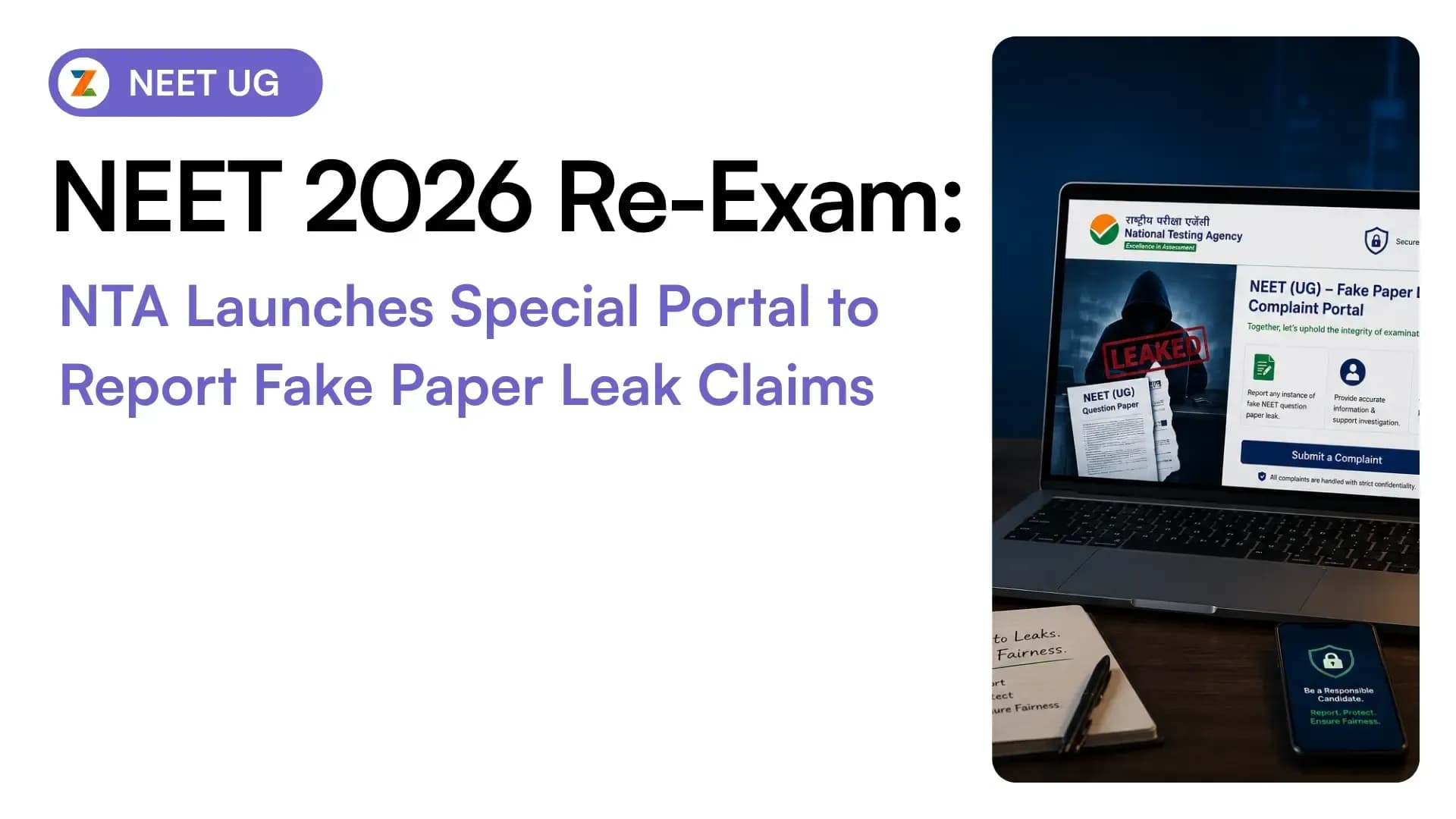
The National Testing Agency has launched a dedicated reporting platform for NEET (UG) 2026 to enable candidates, parents, coaching institutes and the general public to report suspicious claims, unauthorised content and fraudulent activity in respect of the re-exam. The official notification dated June 15th 2026 stated that the re-exam of NEET (UG) 2026 will be conducted on June 21st 2026.
The step is taken to check circulation of fake paper leak rumours, misinformation, impersonation and other malpractices which can create panic amongst the aspirants. NTA had also connected the initiative with the larger framework of the Public Examinations (Prevention of Unfair Means) Act, 2024, which aims to promote fair conduct of public examinations.
Why Did NTA Launch a Reporting Platform for NEET UG 2026?
NTA has launched the platform as false claims often go viral before major examinations, especially on social media, messaging apps and unofficial websites. The notice says the agency wants to hear about suspicious claims, misleading content and fraudulent activity so the material can be reviewed and, where appropriate, referred to law enforcement agencies.
The official reporting page also warns students to be on the lookout for touts and racketeers who will try to cheat students with false promises. It asks people to get the correct information only from official platforms and says the reporting initiative is part of efforts to keep the examination process fair and clean.
What Can Students Report Through the Official NEET Reporting Portal?
Students appearing for NEET UG 2026 can report suspicious activities that can tamper the fairness of NEET UG 2026 through NTA leak paper complaint portal. Candidates, parents and others can report fake paper leak claims, impersonation and other misleading content on the platform.
Websites claiming to provide the NEET 2026 question paper or answer key before the exam.
Social media pages, Telegram channels, WhatsApp groups, or online platforms spreading paper leak claims.
Individuals or organizations offering leaked papers, exam content, or guaranteed ranks for money.
People impersonating NTA officials, government authorities, or examination staff.
Any fraudulent activity, misinformation, or suspicious content intended to mislead NEET aspirants.
How to Report Suspicious NEET Activities Online
National Testing Agency (NTA) has created a dedicated reporting portal to report suspicious activities, allegations of fake paper leaks and examination related frauds related to NEET UG 2026 by students and general public. This is one of the measures to combat misinformation and protect the integrity of the examination process.
Step 1: Visit the official NEET UG 2026 reporting portal on the MyGov Innovate India platform.
Step 2: Log in or register using your mobile number or email ID.
Step 3: Select the category that best matches the suspicious activity you want to report.
Step 4: Enter details such as the nature of the incident, platform/channel, and date and time of occurrence.
Step 5: Upload supporting evidence, including screenshots, links, documents, or other relevant proof.
Step 6: Review the information and submit your complaint through the portal for further examination by the concerned authorities.
What Evidence Should You Submit?
Providing clear and accurate evidence helps authorities verify suspicious claims and take prompt action. The more specific and verifiable the information, the easier it is to investigate potential exam-related fraud.
Submit the following details whenever possible:
Screenshots of questionable messages, posts, ads or conversations.
Links to sites, social media pages, Telegram channels, WhatsApp groups Date/time of sharing/encounter Name of platform/channel on which activity is seen
Names, usernames and contact information of the people behind the profiles.
Copies of documents, images or advertising materials of dubious claims.
Evidence of requests for payment or offers in relation to leaked papers, answer keys or guaranteed grades.
Other information that may be useful in identifying and substantiating the source of the claim.
Common NEET Scams Students Should Avoid
As NEET approaches, students often become targets of fraudsters who exploit exam-related anxiety with false promises and misleading claims. Being aware of these scams can help candidates avoid financial loss, misinformation, and unnecessary stress.
Claims of access to the NEET question paper before the examination.
Fake answer keys shared as "official" or "confirmed" before the exam.
Paid offers promising leaked papers or exclusive exam content.
Messages guaranteeing ranks, scores, or admission in exchange for money.
Fraudulent Telegram channels, WhatsApp groups, and social media pages spreading misinformation.
Individuals impersonating NTA officials or government authorities.
Websites asking candidates to pay for "special access" to exam materials.
Fake counselling, admission, or seat-allotment promises linked to NEET results.
Suspicious advertisements claiming 100% success through secret questions or sure-shot papers.
Official NEET Websites Students Should Follow
To avoid misinformation and fake updates, students should rely only on official government and NTA platforms for NEET-related announcements. These websites provide authentic information on examinations, admit cards, public notices, results, and reporting mechanisms.
NEET Official Website: https://neet.nta.nic.in/
National Testing Agency (NTA): https://nta.ac.in/
NTA Portal to Report Fake Paper Leak Claims (MyGov): https://innovateindia.mygov.in/neet-ug-2026/
PIB Fact Check: https://factcheck.pib.gov.in/
Ministry of Education: https://www.education.gov.in/
What Should You Do If Someone Claims to Have the NEET Question Paper?
Do not pay money, do not forward the message, and do not trust the claim. The official notice says such claims are false and misleading, and candidates and parents are strongly advised not to engage with unverified information circulating on social media or messaging platforms.
The right response is to save the proof, report it through the official portal, and continue following only official NTA updates. That keeps you safe from scams and helps authorities track the source of misinformation.
How This Initiative Can Help Maintain Fairness in NEET UG 2026
This reporting system can improve fairness in three important ways. It gives students and the public a direct channel to flag suspicious activity, helps NTA review misleading claims faster, and supports coordination with law enforcement and the PIB Fact Check Unit when needed.
The portal also encourages public participation, which can help stop rumours before they spread widely. In a high-stakes exam like NEET, that kind of early reporting can reduce panic and protect honest candidates from fraud.
Frequently Asked Questions
Here are some answers to questions you might be looking for.
Related Blogs
Tripura NEET UG Counselling 2026: Registration, Eligibility, Dates, Fees, Seat Matrix & Admission Process
Tripura NEET UG Counselling 2026 is the state-level admission process for candidates seeking MBBS, BDS and other NEET-based undergraduate medical and allied health courses through seats administered by the Tripura Medical Counselling Committee (TRMCC). The counselling is conducted under the Directorate of Medical Education (DME), Government of Tripura.
Aug 17, 2026
Himachal Pradesh NEET UG Counselling 2026: Registration, Dates, Eligibility, Fees & Seat Allotment
Himachal Pradesh NEET UG Counselling 2026 is the state-level admission process for candidates seeking MBBS and BDS seats in medical and dental colleges across Himachal Pradesh. The counselling is conducted by Atal Medical and Research University (AMRU), Himachal Pradesh, on behalf of the Government of Himachal Pradesh.
Aug 17, 2026
Jharkhand NEET UG Counselling 2026: Dates, Eligibility, Fees, Merit List & Seat Allotment
Jharkhand NEET UG Counselling 2026 is the state-level admission process for candidates seeking admission to MBBS, BDS and BHMS courses through NEET UG 2026. The counselling is conducted by the Jharkhand Combined Entrance Competitive Examination Board (JCECEB) for seats covered under the state counselling process.
Aug 14, 2026
Uttarakhand NEET UG Counselling 2026: Registration, Dates, Eligibility, Fees, Merit List & Seat Allotment
Uttarakhand NEET UG Counselling 2026 is the state-level admission process for candidates seeking MBBS and BDS seats in medical and dental colleges across Uttarakhand. The counselling process is conducted on the basis of NEET UG 2026 scores and is used for admission to eligible state quota and other seats offered through the state counselling authority.
Aug 13, 2026
Jammu & Kashmir NEET UG Counselling 2026: Dates, Registration, Eligibility, Fees & Process
Jammu & Kashmir NEET UG Counselling 2026 is the admission process for candidates seeking MBBS and BDS seats in medical and dental colleges across the Union Territory. The counselling process is conducted by the Jammu and Kashmir Board of Professional Entrance Examinations (JKBOPEE) based on NEET UG 2026 scores.
Aug 13, 2026
Odisha NEET UG Counselling 2026: Dates, Registration, Eligibility, Fees & More
Odisha NEET Counselling 2026 is the state-level admission process for candidates seeking admission to MBBS and BDS courses through the Odisha state counselling system. The counselling is conducted by the Odisha Joint Entrance Examination Committee based on the NEET UG 2026 All India Rank.
Aug 13, 2026